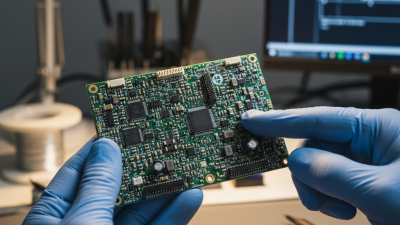
The 2026 rapid pcb market is becoming a practical test of manufacturing discipline. Global buyers now expect prototype boards within 24 to 72 hours, yet speed alone cannot prove supplier quality. Layer count, copper weight, impedance control, inspection depth, and shipping reliability still decide project outcomes.
Prismark’s 2024 PCB industry analysis estimated global PCB sales at approximately US$73 billion, while reporting differences show why buyers should examine methodology carefully. IPC’s industry research also highlights continuing pressure from automotive, aerospace, medical, and high-performance computing applications. These sectors demand traceable materials, controlled processes, and documented testing. A fast quotation means little if a six-layer board arrives with uneven plating or unclear test records.
Happy Holden, a respected PCB technologist and author, described the board as “the heart of an electronic product.” That view remains useful in 2026. The board connects every major design decision, from thermal management to signal integrity. Therefore, this guide evaluates the 2026 Top Rapid PCB Manufacturers for Global Buyers through measurable evidence, not marketing claims.
The comparison considers factory capacity, certification coverage, engineering support, online ordering, prototype flexibility, and export experience. It also examines uncomfortable details, including unclear lead-time promises and inconsistent customer feedback. No ranking is perfect. Supplier performance can vary by material, region, season, and order complexity. Buyers should request recent quality records, sample reports, and written delivery terms before committing production funds.

In 2026, a rapid PCB manufacturer means more than quick delivery. It combines verified engineering, stable production, and clear communication. Experienced teams review Gerber files, stackups, impedance needs, and component risks before manufacturing. They also explain possible limitations instead of promising everything. A reliable supplier should provide traceable materials, controlled solder-mask processes, and inspection records. Certifications matter, but daily process discipline matters more.
Speed alone can mislead. A fast quotation may hide weak design review or unclear tolerances. Strong manufacturers offer rapid prototypes without treating them as careless samples. They confirm layer count, copper thickness, surface finish, and testing requirements. They should also support revisions when real-world testing exposes problems. No factory is perfect. However, transparent correction shows professional maturity.
Tips: Ask for a sample quality report and realistic lead-time range. Confirm whether engineering questions receive human answers. Check how urgent orders are prioritized without reducing inspection steps. Request shipping updates with production photos when appropriate. Compare total cost, not only the first quote. A cheaper board can become expensive after assembly delays, rework, or failed testing. Your evaluation should remain practical, documented, and slightly skeptical.

Comparing global rapid PCB suppliers requires more than checking advertised lead times. A supplier’s real capability appears in process details. Ask for current fabrication limits, layer counts, controlled impedance options, and material specifications. Request sample inspection records, not only polished photographs. Clear answers usually indicate stronger engineering discipline.
Production speed must be measured realistically. Confirm whether quoted days include engineering review, fabrication, electrical testing, and shipping. Review DFM support before placing an order. Good engineers can identify narrow traces, weak annular rings, and unsuitable drill sizes early. They should also explain changes in plain language. Fast communication matters.
Quality evidence deserves careful attention. Look for recognized quality systems, documented process controls, lot traceability, and testing methods suited to the board design. For demanding applications, verify solder mask alignment, copper thickness, surface finish, and impedance reports. A low price can hide exclusions. It may omit tooling, testing, or rework. Compare complete quotations line by line.
Reliability is not always obvious. Ask how suppliers handle material shortages, nonconforming boards, and urgent revisions. A written corrective-action process is more useful than a confident promise. Delivery history should be supported by records. Still, no supplier performs perfectly. My own evaluation would leave room for overlooked risks, especially during the first order. A small pilot batch can expose communication gaps before they affect a larger project.
This chart presents practical procurement screening thresholds rather than company-specific results. Buyers can use them to compare supplier evidence across delivery performance, quality, testing, engineering response, traceability, and compliance documentation. Confirm each metric through audits, IPC-related quality records, ISO 9001 documentation, and order-level performance data.
Reference framework: IPC production and quality practices, ISO 9001 quality-management principles, and RoHS compliance documentation.
Leading Rapid PCB Manufacturers and Their Core Capabilities
Rapid PCB manufacturers now compete on more than short delivery promises. They must control engineering review, fabrication, testing, and logistics as one process. Fortune Business Insights estimated the global PCB market at USD 83.9 billion in 2023, with strong growth expected through 2032. That expansion increases pressure on prototype suppliers and volume partners.
A capable rapid PCB manufacturer should offer online design-rule checks, impedance control, microvia processing, and automated optical inspection. Layer count, copper weight, surface finish, and material availability should be confirmed before quoting. IPC’s North American PCB Statistical Program continues to track demand, sales, and order activity, showing why buyers need current capacity data rather than outdated claims. A fast quote is not always a fast board. Unexpected material substitutions can add days and weaken consistency. I would request cross-section images, test records, and a clear engineering-change process.
Tips: Ask for a realistic timeline with separate stages for review, fabrication, testing, and shipping. Confirm whether the stated lead time begins after payment or after file approval. For safety-critical designs, require documented traceability and electrical testing. It is also wise to compare two suppliers using the same Gerber files, because vague “rapid” labels can hide different process limits. Speed matters, but repeatability matters more.
Global buyers should evaluate rapid PCB manufacturers through evidence, not attractive delivery promises. Request sample boards, inspection records, and a clear production schedule. Quality depends on controlled copper thickness, accurate drilling, clean solder masks, and stable impedance. Ask whether the factory uses automated optical inspection, flying-probe testing, and microsection analysis. Small defects can become expensive failures.
Speed must include engineering response time. A reliable supplier should review Gerber files, stack-ups, tolerances, and material choices before production. Ask how quickly they resolve unclear drawings. A rushed review may create delays later. It happens. Confirm prototype capacity, daily output, and shipping arrangements for your destination. Do not accept “fast” without a defined timeline.
Pricing should show tooling, materials, testing, packaging, and freight separately. Compare equivalent specifications, not only unit prices. Certifications also require careful checking. Look for current ISO 9001 records, relevant IPC process controls, UL recognition where required, and RoHS or REACH documentation for applicable markets. Verify certificate numbers and issuing organizations. A certificate alone does not prove every batch is consistent. Request lot-level test reports and traceability records. Experienced buyers may still miss hidden setup fees or material substitutions, so written confirmation matters.
| Evaluation Dimension | Practical Benchmark for Rapid PCB Buyers | What to Verify Before Ordering | Buyer Priority |
|---|---|---|---|
| Prototype Turnaround | Standard two-layer prototypes are commonly available in approximately 3–7 working days, excluding shipping and engineering clarification time. | Confirm whether the quoted lead time starts after payment, after design approval, or after engineering review. | High |
| Production Lead Time | Small-batch production often requires about 7–15 working days, depending on layer count, material, finish, and quantity. | Request a written schedule covering material procurement, fabrication, electrical testing, final inspection, and dispatch. | High |
| Layer Capability | Rapid-service suppliers commonly support 2–12 layers; advanced HDI, rigid-flex, and high-layer designs require separate process validation. | Check the supplier’s published capability range for layer count, aspect ratio, sequential lamination, and buried or blind vias. | High |
| Minimum Trace and Space | A common standard capability is approximately 0.10–0.15 mm trace and space; tighter geometries may require HDI processes and higher engineering controls. | Compare the design rules with the actual stack-up, copper thickness, surface finish, and impedance requirements. | High |
| Drill Technology | Standard mechanical drilling is widely used for conventional boards; laser microvias are generally required for finer HDI structures. | Verify finished hole tolerance, minimum mechanical drill size, laser-via diameter, registration control, and aspect-ratio limits. | High |
| Material Selection | FR-4 is the normal choice for general electronics; high-Tg, low-loss, aluminum-backed, PTFE, and flexible materials are available for specialized designs. | Request the exact laminate datasheet, Tg, CTE, dielectric constant, dissipation factor, and UL flammability information. | High |
| Surface Finish | Common options include HASL, lead-free HASL, ENIG, immersion silver, and OSP. ENIG is often selected for fine-pitch components and flatness. | Confirm finish thickness, flatness requirements, shelf life, wire-bond compatibility, and compliance with the applicable IPC specification. | Medium |
| Electrical Testing | Bare-board electrical testing is typically performed with flying-probe or fixture-based systems, depending on volume and test-point access. | Ask whether 100% continuity and isolation testing is included, and request test reports or defined acceptance criteria. | High |
| Impedance Control | Controlled-impedance boards require an approved stack-up, dielectric data, trace geometry control, and testing or calculation evidence. | Require a pre-production impedance review and confirm the permitted impedance tolerance for each controlled net. | High |
| Quality Standard | IPC-A-600 is commonly used as a visual and dimensional acceptability reference; the required class should be agreed before production. | Specify IPC class, acceptance criteria, sampling plan, defect disposition, and documentation requirements in the purchase order. | High |
| Management Certification | ISO 9001 indicates a quality-management system; certification scope and validity must be checked rather than assumed. | Request the current certificate, certification scope, issuing body, expiry date, and certificate verification link or reference. | High |
| Environmental Compliance | RoHS restricts specified hazardous substances, while REACH addresses chemical substances and related obligations in the European market. | Obtain a material declaration and confirm whether compliance covers laminate, solder mask, surface finish, and packaging. | High |
| Flammability | UL 94 V-0 is a commonly requested flammability rating for PCB laminate, but the required rating depends on the end product and market. | Verify the laminate’s UL recognition, material family, thickness range, and traceability documentation. | Medium |
| Prototype Pricing | Pricing varies significantly with board size, quantity, layers, copper weight, surface finish, shipping, tooling, and expedited processing; compare total landed cost rather than unit price alone. | Request an itemized quotation covering engineering fees, tooling, testing, taxes, freight, payment charges, and rework terms. | High |
| Price Stability at Volume | Per-board cost generally decreases with higher utilization and repeat orders, but material, copper, energy, and freight costs can change the quotation. | Ask for price breaks, quotation validity, annual-volume assumptions, minimum order quantities, and conditions for price adjustment. | Medium |
| Engineering Support | A capable rapid supplier should review manufacturability, identify ambiguous files, and flag stack-up, annular-ring, solder-mask, or impedance risks before fabrication. | Evaluate response time, engineering language support, revision control, DFM feedback quality, and escalation procedures. | High |
| Logistics and Delivery | Transit time depends on destination, courier service, customs clearance, and shipment terms; manufacturing lead time and delivery lead time should be assessed separately. | Confirm Incoterms, tracking availability, export documentation, packaging method, insurance, and replacement policy for transit damage. | Medium |
| Traceability and Documentation | Reliable production records may include material certificates, electrical-test results, inspection reports, lot identification, and a certificate of conformance. | Define required records, retention period, serial or lot marking, nonconformance reporting, and change-notification procedures. | High |
Note: Lead-time and pricing figures are general industry benchmarks for comparison. Actual results depend on design complexity, order quantity, materials, testing, shipping destination, and the supplier’s confirmed quotation.
A rapid PCB partner should do more than promise short lead times. Their engineers need to review your Gerber files, stackup, drill data, and impedance requirements before production. Ask how they handle unclear notes or conflicting specifications. A reliable team raises questions early, not after panels reach the factory floor. This small step often prevents expensive revisions.
Practical experience matters. Check whether the manufacturer supports your board type, layer count, materials, surface finish, and assembly process. Request sample inspection reports, electrical test records, and clear production timelines. Traceability also matters when several revisions are active. Every file should have a controlled version. Communication should remain specific, especially across time zones. “We can do it” is not enough.
Cost deserves careful attention. A low quotation may exclude tooling, testing, shipping, or engineering changes. Ask for a complete breakdown. Confirm how urgent orders affect inspection depth and capacity. Fast is useful.
Not every supplier fits every project. A prototype specialist may struggle with stable volume production. A large factory may overlook a small design change. I have found that response quality often reveals more than a sales presentation. Still, response speed can be misleading. A quick answer is not always a correct one. Compare technical questions, evidence, and post-delivery support before choosing a long-term PCB partner.