Top Marine Dishwasher Brands for Global Buyers
Choosing the right Marine Dishwasher is a practical decision for shipowners, cruise operators, and offshore catering teams. It affects hygiene, water use, crew time, and galley reliability. UNCTAD’s Review of Maritime Transport 2024 confirms that around 80% of global merchandise trade moves by sea. That scale creates constant demand for dependable marine equipment.
Efficiency matters more than a polished brochure. The IMO’s 2023 GHG Strategy targets net-zero greenhouse gas emissions from international shipping by or around 2050. This direction increases pressure on vessels to reduce energy and freshwater consumption. DNV’s Maritime Forecast to 2050 also highlights operational efficiency, digital monitoring, and cleaner technologies as important maritime priorities. A dishwasher may seem like a small machine, but repeated cycles can influence daily resource use.
Small details matter.
This guide examines top marine dishwasher brands for global buyers through practical criteria, including washing performance, rinse-temperature control, corrosion resistance, spare-parts access, noise, installation flexibility, and after-sales support. IEC 60335-2-58, which addresses commercial electric dishwashing machines, provides a useful safety reference, although vessel conditions may require additional marine specifications and class approval. Buyers should verify every claim with manufacturers and classification professionals. No ranking is perfect. A compact unit may suit a workboat, while a high-capacity system may better serve a cruise galley. The cheapest option can become expensive when filters clog, pumps fail, or service takes weeks. This comparison therefore focuses on evidence, operating realities, and long-term value—not brand reputation alone.
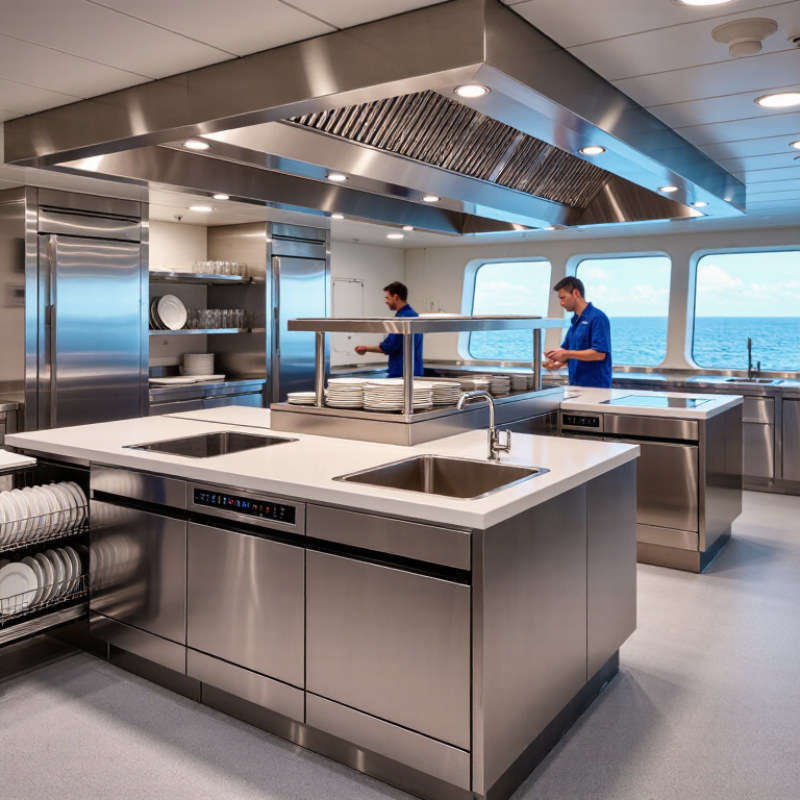
Marine Dishwashers: Purpose, Design, and Essential Features
A marine dishwasher is built for vessels where space, movement, and water quality create daily challenges. It cleans dishes efficiently while resisting vibration, humidity, salt air, and frequent use. Unlike household models, it needs stable operation during motion and reliable drainage in compact service areas. Global buyers should examine the machine’s purpose before comparing price or appearance. Small details matter.
A strong marine design usually combines stainless steel construction with reinforced panels and secure door latches. Rounded internal corners reduce trapped food and simplify sanitation. A compact footprint helps crews work safely around narrow galleys. Wash arms should remain effective with uneven water pressure. Insulated walls can lower noise near sleeping or dining areas. However, a polished exterior does not guarantee dependable performance. Drainage is often overlooked. Installation access deserves equal attention.
Essential features include adjustable wash cycles, efficient filtration, and clear controls that work with wet hands. A high-temperature rinse can support hygienic cleaning when the vessel’s water system allows it. Low-water operation may reduce consumption, but poor filtration can increase maintenance. Buyers should request service manuals, spare-part availability, electrical requirements, and installation guidance. Certification documents also deserve careful review. No specification is perfect. Real performance depends on crew habits, loading patterns, and maintenance discipline. A practical test with ordinary plates, pans, and cutlery can reveal more than attractive product photographs.
Top Marine Dishwasher Brands for Global Buyers
Marine Dishwashers: Purpose, Design, and Essential Features
Commercial dishwashing commonly uses a wash phase of approximately 55–65°C and a high-temperature final rinse of approximately 80–85°C. For marine installations, buyers should also evaluate compact dimensions, corrosion-resistant materials, secure mounting, low water consumption, reliable drainage, and compatibility with the vessel’s electrical and plumbing systems. Actual temperatures and cycle specifications vary by model and sanitation standard.
Leading Marine Dishwasher Brands and Their Product Strengths
Top Marine Dishwasher Brands for Global Buyers
Leading marine dishwasher brands compete through practical strengths rather than attractive labels. The strongest models use corrosion-resistant stainless steel for salty, humid environments. Their compact cabinets fit narrow galleys without sacrificing useful rack space. Some units clean a full load with surprisingly little water. That matters when freshwater tanks are limited. Low-noise pumps also protect sleep during overnight operation. Yet “marine grade” is not always precise. Buyers should inspect the material specification and warranty terms carefully.
Reliable manufacturers usually offer vibration-resistant components, secure door latches, and adjustable feet for uneven decks. Strong filtration systems reduce food residue and protect internal pumps. Efficient heating elements shorten drying time, although performance depends on onboard power capacity. A 230-volt model may suit one vessel but create installation problems on another. Global buyers should check voltage, frequency, plug design, and local service access before ordering. Certification documents are useful, but they do not replace practical installation advice.
From vessel inspections and galley maintenance, one weakness appears repeatedly: owners focus on capacity and overlook repairability. A dishwasher with removable filters and accessible service panels can save hours later. Clear error codes help crews respond without guessing. Some premium models feel excellent during the first season, but spare-part delivery remains uncertain in distant ports. That concern deserves more attention. The best choice balances cleaning performance, corrosion protection, energy use, installation fit, and dependable after-sales support.
Marine Dishwasher Selection by Vessel Type and Operating Conditions
Marine dishwasher selection should begin with vessel duty, not catalog capacity. A coastal ferry may run several wash cycles during each short turnaround. A bulk carrier usually faces smaller crews, longer voyages, and less frequent loading. Offshore vessels add vibration, salt spray, and uncertain freshwater quality. UNCTAD’s Review of Maritime Transport 2024 reports that the world fleet expanded 3.4% in 2023. That growth increases demand for compact, dependable galley equipment. Passenger ships need throughput, noise control, and fast drying. Cargo vessels need low water use and accessible spare parts. Cruise operations require redundancy because one failure quickly affects hotel service.
Operating conditions change the specification. Check voltage, frequency, freshwater pressure, drain height, and heat rejection before purchase. IMO’s 2023 GHG Strategy reinforces the industry’s efficiency direction. Water, electricity, and detergent consumption deserve careful comparison. DNV’s Maritime Forecast to 2050 also places operational efficiency at the center of fleet planning. Ask for tested cycle data, not only claimed capacity. A 500-plate rating means little when soil levels vary or recovery is slow. In my experience, stainless construction, filtration, interlocks, and clear fault codes reduce galley interruptions. Buyers still overlook service access. That is costly. Record daily loads and wash temperatures for one month. Then compare results with actual crewing and voyage patterns. The smaller unit may win, if it survives rough seas and weak freshwater pressure.
Installation, Maintenance, Safety, and International Support Considerations
Marine dishwashers for global vessels require more than strong cleaning performance. Installation must match the vessel’s electrical system, water pressure, drainage path, and available ventilation. A certified technician should check connections before the first cycle. Small errors can cause vibration, leaks, or repeated fault codes at sea.
Maintenance should follow a clear schedule. Rinse filters after busy service periods, inspect spray arms, and remove salt deposits from internal surfaces. Stainless steel may still stain when exposed to harsh chemicals or standing water. Safety depends on stable mounting, secure hoses, proper earthing, and clear access to the emergency shutoff. Crew members also need simple operating instructions in their working language. International support matters when spare parts, manuals, or remote troubleshooting are needed across ports. Response time is important. Yet, port coverage can be overstated, so buyers should verify local technicians and delivery times before purchasing.
Tips: Photograph the installation area first. Record voltage, water pressure, drain height, and cabinet dimensions. Keep replacement seals and filters onboard, but confirm their storage limits. Test the machine under a normal load, not an ideal one. We sometimes overlook noise during acceptance checks. That mistake becomes obvious during night operations. Review service records monthly, and question any recurring alarm instead of repeatedly resetting it.