
Blog

China Top 10 Keyless Entry Door Lock Suppliers?

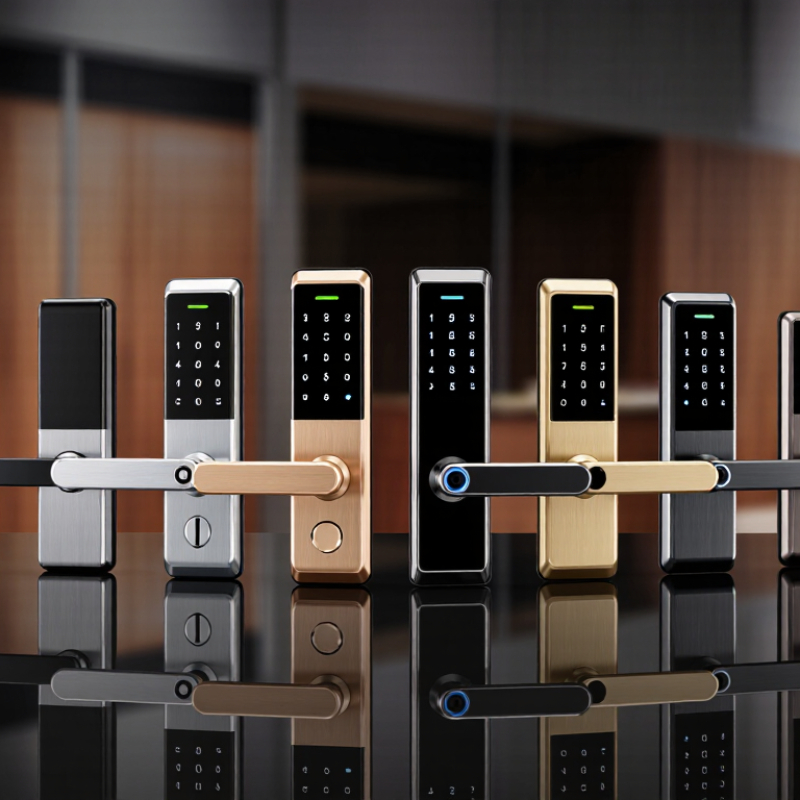
Choosing a reliable Keyless Entry Door Lock supplier requires more than comparing prices and touchscreen designs. Buyers must examine security engineering, manufacturing experience, certifications, warranty policies, and after-sales support. A polished product can still disappoint if its mobile application fails, batteries drain quickly, or replacement parts are difficult to obtain.

Bruce Schneier, a respected security technologist, once said, “Security is a process, not a product.” His observation remains highly relevant to smart door access. A dependable supplier should explain how its locks protect fingerprints, passwords, temporary codes, and wireless communication. It should also describe what happens when power fails, connectivity disappears, or an administrator loses access. Small details matter. A hidden mechanical key. A clear low-battery warning. Local technical support.

This guide reviews ten leading Keyless Entry Door Lock suppliers connected with the Chinese market. The comparison considers product design, production capacity, customization, testing practices, export experience, and customer feedback. It does not assume that the largest factory is automatically the safest choice. That would be too simple.

Some suppliers may excel at residential locks, while others focus on hotels, offices, or rental properties. Their strengths are not interchangeable. Readers should verify current certifications, installation requirements, software compatibility, and regional service conditions before purchasing. Supplier information can change, and online claims deserve careful checking. The final choice should match the door, users, budget, and risk level—not merely follow a popular ranking.
China Top 10 Keyless Entry Door Lock Suppliers?

Keyless Entry Locks Defined: PIN, RFID, Biometric, and Mobile Access

Keyless entry locks remove the need for traditional metal keys. PIN locks use a numeric code entered on a touch keypad. They are simple for apartments, offices, and rental properties. RFID locks read cards, tags, or wristbands at close range. They work well where many users need quick access. However, lost cards still require prompt removal from the access list.

Biometric locks identify fingerprints or other physical features. They offer convenient entry, especially for private rooms and staff areas. Finger recognition may become less reliable with wet hands, dust, or small injuries. Mobile access uses a smartphone application, Bluetooth, or another wireless connection. It can support temporary permissions and activity records. Battery life and phone compatibility deserve careful testing.

When comparing Chinese suppliers, buyers should request sample units, test reports, warranty terms, and clear installation instructions. A dependable supplier explains encryption, emergency power, user deletion, and data storage practices. Ask how the lock behaves after repeated failed PIN attempts. Also check whether the keypad remains readable after months of use. In practical evaluations, convenience often hides maintenance costs. I would not choose a lock based on appearance alone. No access method is perfect. A strong product balances security, reliability, simple management, and fast recovery when technology fails.

Market Context: Global Smart Lock Revenue Hit US$2.8B in 2023 (GVR)

China’s Top 10 Keyless Entry Door Lock Suppliers?

Global smart lock revenue reached US$2.8 billion in 2023, according to Grand View Research. The report also forecasts strong growth through 2030, supported by connected homes and replacement demand. Another MarketsandMarkets study estimates a lower market size, showing how research definitions can differ. Some reports include electronic cabinet locks, while others focus only on residential doors.

For buyers reviewing China’s leading suppliers, scale alone is not enough. A reliable supplier should show test records, production capacity, firmware controls, and traceable quality inspections. Check battery performance under frequent use. Test fingerprint recognition with wet or dusty fingers. Examine emergency power access, cylinder strength, and resistance to forced entry. These practical checks often reveal more than polished product photos.

A supplier ranking is never perfect. Export experience, after-sales response, and certification readiness can change quickly. It is also risky to compare factory prices without comparing materials, software support, and warranty terms. Fortune Business Insights reports continued growth in smart home security, but adoption still depends on consumer trust and installation simplicity. For that reason, the strongest candidates are not always the largest factories. A smaller manufacturer with stable testing records may deserve closer attention. The market is expanding, but supplier evaluation still requires hands-on evidence.

China Top 10 Keyless Entry Door Lock Suppliers? - Market Context: Global Smart Lock Revenue Hit US$2.8B in 2023 (GVR)

No. Evaluation Dimension Verified Market or Technical Data Supplier Benchmark for Buyer Review Recommended Evidence
1 Global Market Context The global smart lock market generated approximately US$2.8 billion in revenue in 2023, according to the cited Grand View Research market context. Prioritize suppliers with documented export experience and product lines designed for residential, rental, hospitality, or commercial applications. Export records, product catalogues, regional certifications, and application references.
2 Keyless Access Methods Common access methods include PIN codes, RFID or NFC credentials, Bluetooth Low Energy, mobile applications, remote cloud access, and physical override keys. The supplier should clearly define which access methods are included, optional, or dependent on a gateway or subscription. Functional samples, access-control matrix, mobile application demonstration, and gateway requirements.
3 Mechanical Compatibility Compatibility depends on door thickness, backset, mortise or cylindrical configuration, handing, latch dimensions, and cylinder requirements. A complete dimensional drawing should be available before sampling or mass production. 2D drawings, installation templates, door-thickness range, and a physical fit test on the target door.
4 Electrical Power Design Battery-powered locks require defined battery type, low-battery warning, emergency power input, standby-current data, and a mechanical or electronic backup method. Battery-life claims should be stated under a defined test profile rather than as an unqualified number. Battery test report, current-consumption data, emergency-power test, and low-battery alert demonstration.
5 Wireless Connectivity Bluetooth Low Energy is suitable for local mobile access; Wi-Fi enables direct network connectivity; a gateway may be required for remote access on some designs. The product specification should identify radio bands, communication range, gateway dependency, and offline behavior. Wireless specification sheet, range test, router compatibility list, and offline-access test.
6 Cybersecurity and Data Protection Relevant controls include encrypted communication, secure credential storage, authenticated firmware updates, account management, event-log protection, and access revocation. Suppliers should provide a documented security architecture and vulnerability-response process. Security white paper, penetration-test summary, update policy, privacy policy, and incident-response procedure.
7 Environmental Protection An IP rating describes protection against solid particles and water ingress; IP54, for example, indicates limited dust ingress protection and protection against water splashes. The required rating should match indoor, sheltered outdoor, or exposed outdoor installation conditions. IP test report, operating-temperature range, corrosion-resistance test, and outdoor installation validation.
8 Compliance and Safety Documentation Export requirements may involve electromagnetic compatibility, radio-equipment, electrical-safety, chemical-substance, and market-specific conformity requirements. Compliance must be assessed for the destination market and for the exact hardware, radio module, charger, and software configuration. Declarations of conformity, laboratory reports, safety files, material declarations, and certification scope checks.
9 Software and Integration Capability Integration may use mobile SDKs, cloud APIs, webhooks, property-management interfaces, or smart-home standards such as Matter where supported by the specific product. The supplier should distinguish between local control, cloud control, third-party integration, and recurring service fees. API documentation, sandbox access, integration test report, data-hosting details, and service-level terms.
10 Quality, Warranty, and After-Sales Support Key quality indicators include incoming-material inspection, production traceability, functional testing, failure analysis, spare-parts availability, and warranty response procedures. Use a documented quality plan with agreed acceptance criteria rather than relying only on a factory audit or product sample. Quality-management certificate, inspection plan, sample approval record, warranty terms, spare-parts list, and response-time commitment.
Source and methodology: Market context is based on the cited Grand View Research figure of approximately US$2.8 billion in global smart lock revenue for 2023. Technical requirements should be verified against the applicable product documentation, destination-market regulations, and independent test reports.

Ranking China’s Top 10 Suppliers by OEM, MOQ, Exports, and Certifications

China Top 10 Keyless Entry Door Lock Suppliers?

This ranking evaluates China’s top ten suppliers through four purchasing indicators: OEM depth, MOQ flexibility, export experience, and certifications. MarketsandMarkets estimates the global smart lock market could grow from about USD 2.3 billion in 2023 to USD 4.4 billion by 2028. That growth increases pressure on suppliers to deliver more than a basic keypad lock. High-ranked factories usually support custom housings, firmware adjustments, packaging design, and sample approval. Their typical MOQ ranges from 100 to 500 units for private-label orders, while fully customized projects may require 500 to 1,000 units. These figures vary.

Export capability also matters. ITC Trade Map data for HS 830140 places China among the leading exporters of locks and related hardware. However, shipment volume alone does not prove reliability. Buyers should review recent export markets, lead-time records, spare-parts policies, and response speed. Certification checks should include ISO 9001 for quality systems, plus CE, RoHS, FCC, or UL-related evidence when the destination requires them. Certificates need verification.

A practical scoring model can assign 30% to OEM capability, 20% to MOQ, 20% to export history, and 30% to compliance and quality control. This weighting is imperfect. It may undervalue after-sales support. Factory audits should confirm test equipment, battery checks, water-resistance testing, and final inspection records. A cheaper quotation can hide tooling fees, cloud-service charges, or unstable app performance. Ask for evidence, not promises.

China Top 10 Keyless Entry Door Lock Suppliers: Capability Benchmark

This anonymous benchmark uses normalized industry indicators for OEM/ODM capability, MOQ flexibility, export readiness, and certification coverage. Higher scores indicate stronger suitability for international private-label and project procurement. MOQ flexibility is scored inversely, meaning suppliers with lower and more flexible minimum order quantities receive higher scores.

Security Benchmarks: ANSI/BHMA, EN 14846, IP Ratings, and Matter

China Top 10 Keyless Entry Door Lock Suppliers?

Security claims should begin with measurable standards, not polished product photos. For China-based suppliers, request current test reports and confirm the exact lock model. ANSI/BHMA grades indicate durability, cycle performance, and operational strength. However, a grade does not automatically prove resistance against every attack. Check whether the report covers the complete lockset, including the cylinder, strike, and electronic parts. Small gaps matter.

EN 14846 focuses on electromechanically operated locks and striking plates. It helps assess locking force, endurance, and safe operation under defined conditions. Ask suppliers about fail-secure and fail-safe behavior during power loss. Test the keypad with wet fingers, gloves, and repeated incorrect codes. Real buildings are less controlled than laboratories. That difference deserves attention.

IP ratings describe resistance to dust and water under IEC 60529 testing. An IP65 rating may suit a sheltered entrance, but direct rain and coastal salt require further evidence. Matter can improve compatibility across supported smart-home platforms, yet it is not a complete security certification. Ask about commissioning, encryption, local control, and firmware support. A supplier should explain update timing and vulnerability handling clearly. Sometimes, the weakest detail is the installation manual.

Supplier Scorecard: Price, Lead Time, App Features, Warranty, and Support

China Top 10 Keyless Entry Door Lock Suppliers

A practical supplier scorecard should measure more than factory price. For the top ten candidates, assign 25% to price, 20% to lead time, 20% to app features, 15% to warranty, and 20% to support. Request one sample before placing a bulk order. Record the unit cost, minimum order quantity, packaging quality, and hidden charges. A low quotation can lose value when replacement parts arrive slowly.

Lead time needs evidence, not promises. Ask for production schedules, sample dates, and shipping records. Test the mobile app on both Android and iOS devices. Check user permissions, temporary access codes, activity logs, battery alerts, and offline operation. A stable app matters more than a crowded feature list. Weak Wi-Fi may expose problems.

Warranty terms should name covered parts, response times, and replacement procedures. Support teams should answer technical questions clearly and provide installation drawings in usable English. Score every supplier using the same spreadsheet. Keep written records. A scorecard is helpful, but not flawless. App performance can change after an update, and factory references may be selective. I would also inspect failed samples, because polished demonstrations rarely show jammed batteries or unclear reset steps.