Top Applications of Flexible Printed Circuits in Modern Electronics?
Flexible printed circuits have revolutionized modern electronics. These circuits are lightweight, compact, and versatile. They are instrumental in various applications. For instance, smartphones utilize flexible printed circuits to save space. The design allows for intricate layouts that fit into small devices.
Wearable technology is another area where flexible printed circuits shine. They enable essential functions in fitness trackers and smartwatches. The flexibility ensures comfort for users. However, challenges remain in durability and reliability. Some circuits may not withstand extreme conditions.
In automotive applications, flexible printed circuits contribute significantly to safety and efficiency. They connect sensors and control systems seamlessly. This enhances performance but raises concerns about long-term maintenance. Overall, flexible printed circuits continue to shape the electronics landscape. Yet, there is room for improvement in their design and manufacturing processes.

Applications of Flexible Printed Circuits in Mobile Devices and Gadgets
Flexible Printed Circuits (FPCs) have transformed the design of mobile devices and gadgets. Their lightweight nature and ability to bend make them perfect for modern electronics. According to a recent industry report, the flexible circuit market is projected to reach $17 billion by 2027. This growth highlights their crucial role in compact devices.
In smartphones, FPCs enhance connectivity. They connect various components, such as displays and touch sensors. These circuits save space, leading to thinner devices. A study reveals that 70% of smartphone manufacturers utilize FPCs for this purpose. However, the manufacturing process can be complex. Design flaws can lead to circuit failures.
Wearable technology also benefits significantly from FPCs. They power smartwatches and fitness trackers with efficiency. A report indicates that over 50% of wearables use flexible circuits. While yielding impressive results, this reliance raises concerns about long-term durability. Devices often face challenges in extreme conditions. Despite their advantages, manufacturers must continuously innovate. Addressing limitations in durability remains essential for the future.
Utilization of Flexible Circuits in Wearable Technology and Health Monitoring
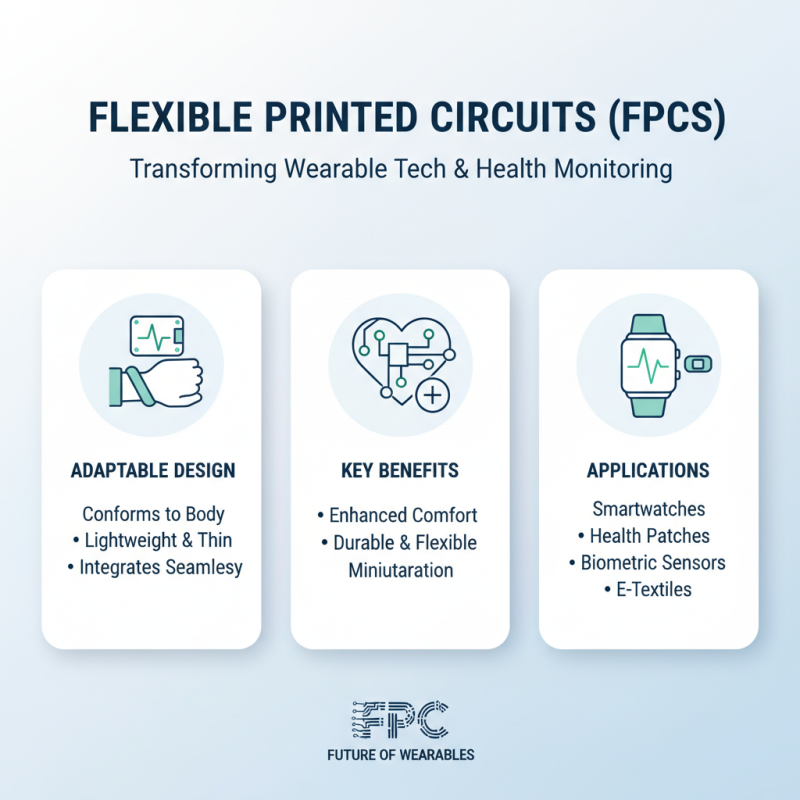
Flexible printed circuits (FPCs) are transforming wearable technology and health monitoring. These circuits offer unique benefits due to their lightweight and adaptable nature. They can bend and conform to various surfaces, making them ideal for integration into devices worn on the body.
In health monitoring, FPCs are used in smartwatches and fitness trackers. They enable continuous data collection, such as heart rate and activity levels. The flexibility of these circuits allows for comfortable wear, which is essential for long-term usage. However, the durability of FPCs can raise concerns. Over time, repeated bending could lead to failures. Manufacturers must address this issue to ensure reliability.
Wearable devices utilizing FPCs are often sleek and unobtrusive. This design aspect encourages user engagement, as people are more likely to wear devices that fit seamlessly into their daily lives. Yet, the integration of technology into clothing and accessories may feel invasive to some. Balancing functionality and privacy remains a significant challenge. FPCs are paving the way, but careful reflection on user experience is crucial.
Role of Flexible Printed Circuits in Automotive Electronics and Connectivity
Flexible printed circuits (FPCs) play a vital role in
automotive electronics. They
facilitate advanced connectivity and can be found in various applications. For instance, FPCs are
crucial in infotainment systems. They enable better communication between different
electronic components. This integration enhances the overall
driving experience.
In modern vehicles, FPCs are increasingly used in sensor systems. These circuits support features
like adaptive cruise control and lane-keeping assistance.
However, these systems can sometimes be prone to connectivity issues. Engineers
must address these problems to improve reliability. Another interesting use is in electric vehicles. FPCs help
manage battery connections efficiently. They save space and reduce weight, yet they need to ensure durability under
varying conditions.
Despite their advantages, FPCs have limitations. Environmental factors can affect their performance. While they
offer flexibility, their lifespan might not compare to traditional circuits. Engineers should continuously evaluate
these aspects. Future developments could enhance their reliability, ensuring
they meet the demands of modern automotive technologies.
Impact of Flexible PCB Integration in Consumer Electronics and IoT Devices
Flexible printed circuits (FPCs) are revolutionizing the consumer electronics landscape. These circuits offer remarkable adaptability, allowing devices to become thinner and more lightweight. Their integration in smartphones, wearables, and other gadgets enhances functionality without compromising on design. Many users appreciate how FPCs can fit into tight spaces, making devices more compact.
In the realm of Internet of Things (IoT) devices, flexible PCBs play a crucial role. They enable seamless connectivity and efficient power management. The flexibility allows for innovative designs that can conform to various shapes. This opens up possibilities for unique applications. However, not every design realizes its full potential.
Some manufacturers struggle with durability issues. While flexibility is an asset, it can also lead to challenges. These devices must endure wear and tear. There is still room for improvement in materials and manufacturing processes. Overall, the impact of FPCs is significant, but the path forward requires addressing these challenges.
Top Applications of Flexible Printed Circuits in Modern Electronics
This bar chart illustrates the market share percentages of various applications of Flexible Printed Circuits (FPCs) in modern electronics. The highest market share is held by Consumer Electronics, reflecting the widespread use of FPCs in smartphones, tablets, and other gadgets. Medical Devices and Automotive sectors also show significant utilization, while Wearable Technology and IoT Devices represent emerging markets benefiting from the flexibility and efficiency of FPC integration.
Advancements in Manufacturing and Design Techniques for Flexible Circuits
Flexible printed circuits (FPCs) have revolutionized the electronics industry. Their design allows for lightweight, compact devices. They can be bent and shaped to fit various applications. This adaptability is particularly valuable in wearable technology and medical devices.
Recent advancements in manufacturing and design techniques have enhanced the potential of flexible circuits. For instance, new materials offer better flexibility and durability. Certain processes now allow for finer features on the circuits. However, there are still challenges in achieving consistent quality. Manufacturers must ensure that defects do not affect performance.
Moreover, integrating flexible circuits with other technologies is an ongoing exploration. Hybrid designs, combining rigid and flexible elements, are becoming more common. Yet, this complexity can lead to increased production time and costs. Balancing innovation with efficiency remains a pressing concern. As the industry evolves, continual reflection on these processes will be crucial.